La Rivière
Tracking the sculpture by Aristide Maillol /2026
Where in the World are the sculptures La Rivière (The River) by Aristide Maillol ?
Hey, I am a cultural time-traveler. How nice that we meet here in virtual space and time. BTW I am not an art historian – nonetheless, my aim is to be correct and transparent about the finding, and not to trust any AI junk. Especially the topic area of Aristide Maillol’s River produces severe mis-information. On the other hand, this page documents the conclusions of my ChronoRecherche.
Enjoy – Matthias MProve, Chrono Research Lab
Several sculptures of La Riviére have been casted in lead or bronze. Under humid weather conditions lead develops a powder white surface, while bronze contains copper that turns green over time. The exact number of editions and casts is uncertain.
The first edition was casted after the death of Maillol in the late 1940s. A museum in Virginia has a lead cast numbered 2/6. According to the creation years this must be the first. But then something else is odd. See details and locations below.
St. Louis purchased her bronze River in 2007. It has the number 3/4.
The bronze casts numbered 4/6 (Houston, 2016) and 5/6 (Sotheby’s 2014) seem to be from a later edition.
A bronze cast nunbered EA 4/4 (EA = Épreuve d’Artiste) surfaced in 2019. Sotheby’s writes: example cast in 2015 as number EA 4/4 from an edition of 12.
Oh sister, now it is getting crowded!
To sum them up: It is possible that we have 8 9 casts in lead and up to 12 + 4 = 16 in bronze. (I hope we do not have to add 4 + 6 + 12 + 4.)
A comprehensive inventory does not exist yet. On this page we have assembled 12, maybe 14. Follow the ChronoScroll to track known locations of La Rivière.
First Edition in LEAD
— edition of 6, 1947 ~ 1950(?) —
Jardins des Tuileries / Le jardin du Carrousel, Paris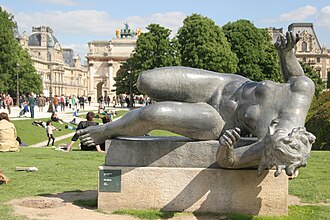
Cast: lead 1947, unnumbered | Musée d'Orsay collection card
Dina Vierny herself managed to move 20 Maillol sculptures into the Carrousel garden of the Louvre. /via
Virginia Museum of Fine Arts, Richmond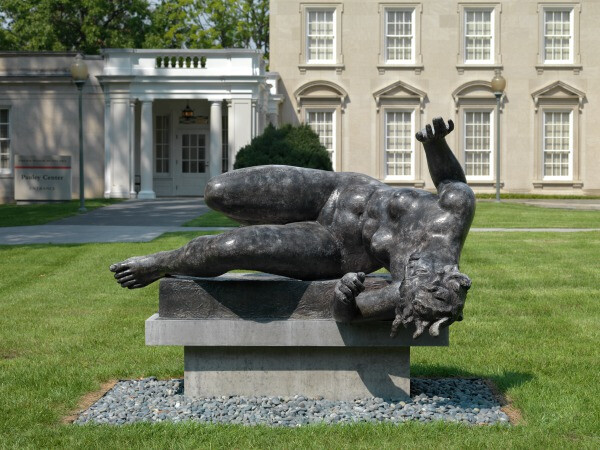
Cast: lead 1944, numbered 2/6 | collection card | insta | insta2
The item number is 70.16 – indicating a year of 1970. Then this sculpture might not part of the first 6 castings. But there are no other 6 castings.
Furthermore, a casting date of 1944 is unrealistic. Maillol died in ’44. It took a few years until the first sculptures had been casted. So what’s the provenance of this River?
- Sculpture Garden
- The River /photos by Mary Ann Sullivan
- The Virgina River – just another artist posing
- 5 fotos of photos on farcebook
Kunsthalle Hamburg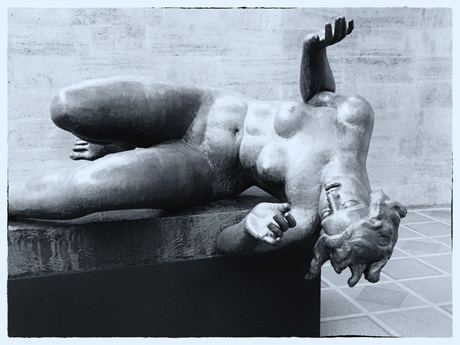
Cast: lead 1947 (source), unnumbered | Kunsthalle collection card Inv. Nr.: S-1953-12 | insta | farcebook
MoMa NewYork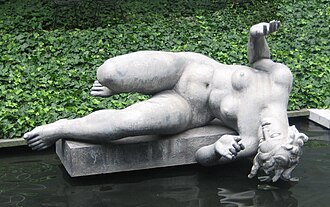
Cast: lead unnumbered, 1948 | MoMa collection card | purchased 1949
wiki photo 2007 - photos from MoMa, New York (and Pasadena)
- Documentary: How To Live In A City 1964 ChronoMedia
Jardin De Sculptures à Bruxelles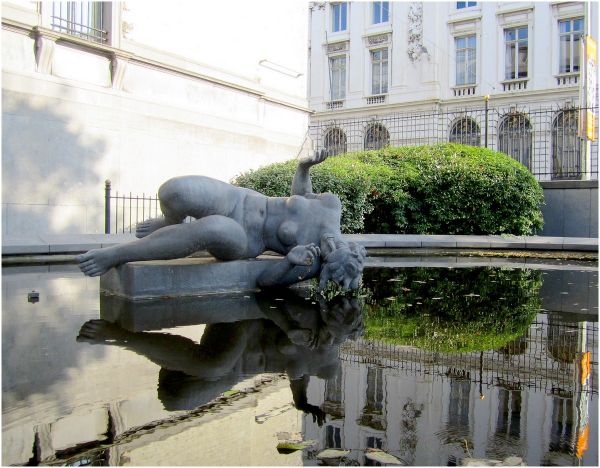
Cast: lead 1950 | collection card | purchased from M. Lucien Maillol in 1951
Middelheim Museum, Antwerp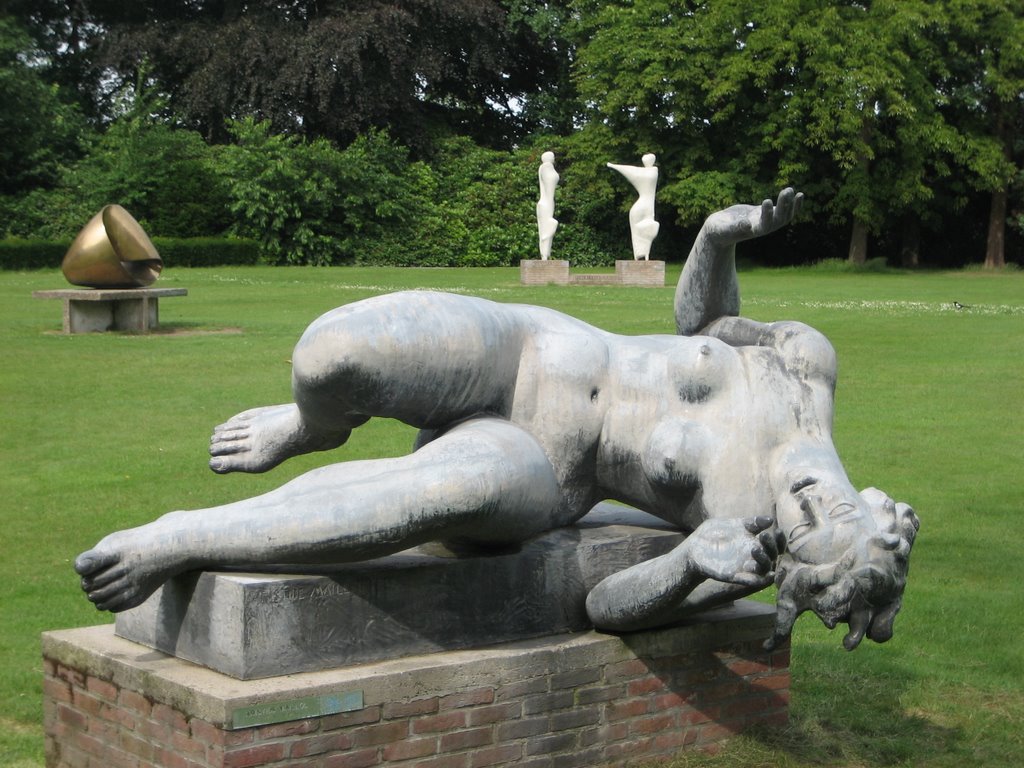
De riviere (according to park plan)
Cast: lead | collection card | acquired 1951
Collection Dina Vierny / Musée Maillol, Paris /1995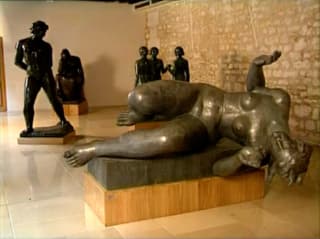
La Rivière at The Museum Maillol, 1995 | cf. Фильм Ольги Свибловой «Дина Верни» (portrait of Dina Vierny) – at 48' 20"
Cast: lead | from the 1940s edition! Is this 1/6?
Auction 2013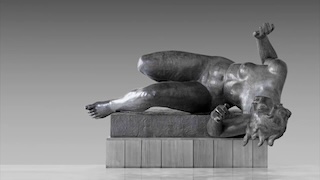
La Rivière Auction at ARTCURIAL, Paris
Maillol's La Riviere –from the Collection Dina Vierny– was sold at Artcurial/Sotheby’s in 12/2013 for € 6 mil by Bruno Jaubert.
current location/owner unknown
There are three kinds of mathematicians. One can count. The other not.
Something is odd. 7 – out of an edition of 6! And somehow the creation dates are misleading. Would either Antwerp or the Collection Dina Vierny be the first cast?
Dina Vierny
Aristide Maillol met Dina Vierny in 1934. She became his muse and model until his death in 1944. Later she was an art collector, musician, and in 1995 she founded the Musée Maillol in Paris.
A few media references:
- Interview with Dina Vierny, NPR 2008
- An Interview with Dina Vierny, Model and Muse to Aristide Maillol, 2007
- RADIOSCOPIE - Jacques Chancel reçoit Dina Vierny (1975)
- Dina Vierny & Aristide Maillol – Movie scene by Lei Aznavour
- Dina Vierny (Moldavia) - Bodaibo (1975)
- Блатные песни - 1975
Later editions in Lead
Norton Simon Museum, Pasadena, CA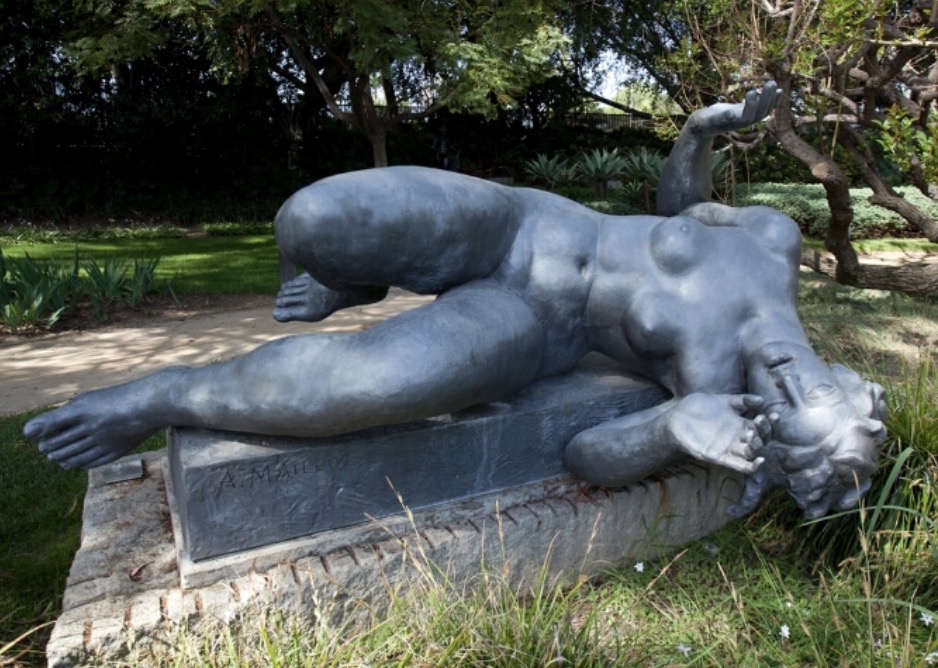
Cast: lead | collection card | gifted 1970
Skylands, Northeast Harbor, Maine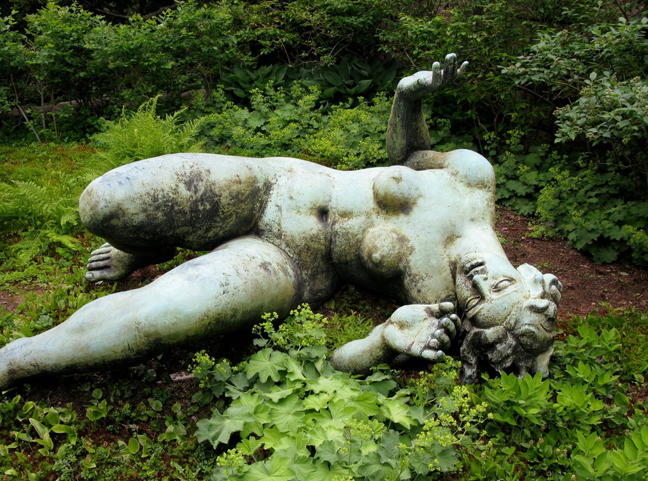
Cast: lead | private collection | insta
- Aristide Maillol's "La Riviere" at Skylands
- The River at Martha Stewart’s Garden, Skylands, Northeast Harbor, Maine
- Flower: Martha Stewar’s Summer Getaway, Skylands
- google earth 2015
Bronze
Citygarden St. Louis
Cast: bronze numbered 3/4 | collection card ; purchased in 2007 | insta | insta 2 | insta 3
wiki photo - The River at CityGarden, St. Louis, Missouri i.e. garden planning
- CityGarden Gallery image 4/19
Museum of Fine Arts Houston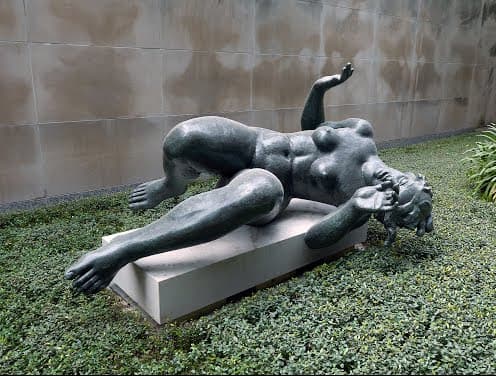
Cast: bronze numbered 4/6 | collection card | acquired from Dina Vierny, Paris in 2016
We have x/4, x/6 and (further below) x/12. Is this an ever extending edition? Or shall we treat 4 + 6 + 12 as three separate editions?
Thalacker in Zürich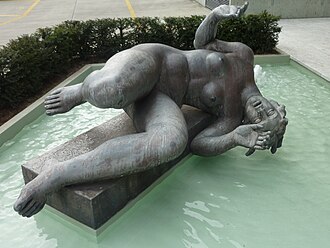
.jpg)
Cast: bronze Restaurierung 2001 nach Vandalismus
War 2008 – 2011 im Kunsthaus Zürich. /NZZ: Sie badet wieder | Foto im Kunsthaus
Auf zum kulturellen Outdoor-Workout! Am Talacker legen wir eine Matte auf den Brunnenrand, nehmen die Position der «Rivière» ein und halten diese 30 Sekunden lang. Die Übung wird zehnmal wiederholt und stärkt Rumpf und Hals. /via
Portland Art Museum
The River /temporarily loaned from a private collection, 2012 ~ 2014
Cast: bronze | current owner and location unknown
Many thanks to Grace Gungadee from the Portland Art Museum for her support on this research project!
Collection Dina Vierny
Barcelona 2009/10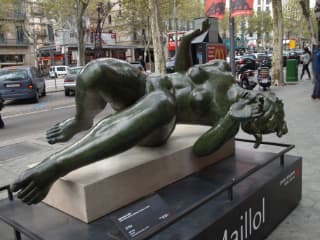
El Riu /temporary exhibition 10/2009 – 1/2010 in Barcelona
Cast: bronze | Collection Dina Vierny, Paris
La Rivière /exhibition on tour Paris, Zürich 2023
Cast: plaster | insta 1944 | insta 2023a | insta 2023b | exhibition in Zurich
Sotheby’s Auctions
2014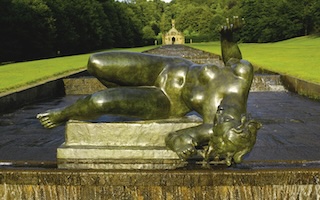
The River at its former location at Chatsworth House in Derbyshire, England | info post
Cast: bronze numbered 5/6 | Sotheby’s info card
inscribed Aristide Maillol, numbered 5/6 and stamped with the foundry mark E Godard Fondeur Paris. Sold to a private collection in Switzerland.
La Rivière was originally conceived as a monument sculpture to French philosopher, politician and renowned pacifist Henri Barbusse. Maillol modelled a woman stabbed in the back and falling downwards, perhaps shielding herself from her aggressors with her up-thrust arms, as an inverse celebration of Barbusse's pacifying ideals. When the commission fell through, Maillol developed the sculpture into a personification of swelling water. In this light, the natural, unchecked energies of the river comes to mirror the social and political uncertainties of the mid-twentieth century. Maillol conceived this work two years before the beginning of the Second World War, when tensions and troubles were coming to a head. /via Sotheby’s info card
2015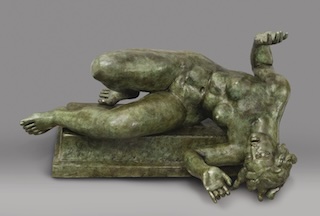
- Impressionist & Modern Art Evening Sale / Lot 15, 2019:
- Cast: bronze example cast in 2015 as number EA 4/4 (EA = Épreuve d’Artiste) from an edition of 12
- sold for Galerie Dina Vierny, Paris, for 2mil
This is the only source that mentiones an edition of 12 in 2015. Is it true? Do they all exist (yet)? Where are they?
Reflections
In 2016, Swiss artist Urs Fischer exhibited a replica of Maillol's 'La Rivière' at the JTT gallery in New York. It was made out of modeling clay, so that visitors could touch and deconstruct the work. / 3 photos via insta
References
- La Rivière (Maillol) at Wikipedia
- Aristide Maillol – Moderner Bildhauer in klassischer Tradition
- Aristide Maillol, sculpteur. documentary by Jean Lods, 1942 /via insta photo 1944
- MAILLOL La Quete De L’Harmonie /French documentary, 2022 – ChronoMedia at Banyulus-sur-Mer
- MIN - Aristide Maillol - La Riviere (Sans Socle) - Sculpture (1:07min) - 2015 | artnet: La Rivière, sans socle | cast: bronze
- photos on alamy
- La Rivière – The River – Der Fluss /prior research page by mprove
 Monetary Support
The historic and cultural time rides –as provided by the Chrono Research Lab– are a free service by Matthias Müller-Prove. You can explore more then 8,000 georeferenced old maps, browse through more than 5,000 info spots, and enjoy 42 ChronoScrolls and vintage photo sets.
On the other hand this means that there are some expenses on traveling across centuries. You can support future trips by your donation. Thank you!
 Support Me on Ko-fi