Design for Good or Evil
Eine Podiumsdiskussion zum World Usability Day am 8.11.18 in Hamburg
Ist es ethisch und moralisch vertretbar, mit Methoden des UX Designs die Kunden auszutricksen?
In dieser Podiumsdiskussion soll es darum gehen, wie sich Unternehmenskennzahlen und Businessmodelle auf Entscheidungen im Produkt-Design auswirken und ob diese immer ethisch und moralisch zu vertreten sind. Wir möchten die „dunkle“ Seite des UX Designs beleuchten, und diskutieren dazu u.a. die folgenden Fragen:
- Wie sehr kann man durch Usability und User Experience (UUX) die Nutzer manipulieren?
- Ist es moralisch verwerflich zum Kauf oder Spiel zu verführen?
- Sind UX Designer schlechte Menschen?
- Wie können wir verhindern, dass Nutzer ledglich als Zahlen und KPIs gesehen werden?
Link-Empfehlungen
World Usability Day Switzerland: Coole Linksammlung der WUD-Kollegen aus Hamburg zum Thema DesignForGoodOrEvil wudch2018 wudhh wud2018
Design Prinzipien und Berufsethos
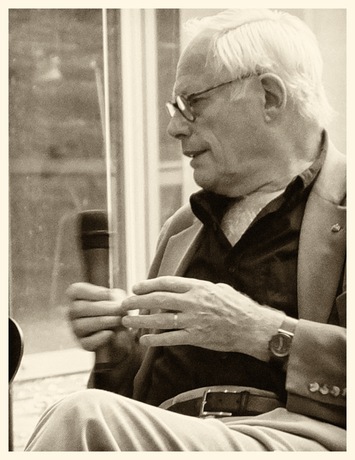 Dieter Rams – Ten Principles for Good Design, 1970s:
- Good design is innovative
- Good design makes a product useful
- Good design is aesthetic
- Good design makes a product understandable
- Good design is unobtrusive
- Good design is honest
- Good design is long-lasting
- Good design is thorough down to the last detail
- Good design is environmentally-friendly
- Good design is as little design as possible
- Dieter Rams’ speech 1976
 Dieter Rams am 21.10.2012 im Museum für Kunst und Gewerbe
- Rams (2018) by Gary Hustwit
- 10 New Principles Of Good Design. Dieter Rams’s design principles get a 21st-century update /by Suzanne Labarre, fastcompany
 UXPA Code of Professional Conduct – Ethical Principles:
- Act in the best interest of everyone
- Be honest with everyone
- UX practitioners shall not knowingly mislead a client or potential client about the suitability of a product or service.*
- UX practitioners shall give recommendations that are objective, consistent with accepted principles, and/or based on the judgment of qualified professionals.
- UX practitioners shall never deliberately misinform or mislead individuals for whom they are providing services.
- UX practitioners shall credit the intellectual property right of work, methods, and tools done or created by others in such a way that all parties involved are always clear as to the origin of such and the rights of the UX practitioner to use or cite such work, methods or tools.
- Do no harm and if possible provide benefits
- Act with integrity
- Avoid conflicts of interest
- Respect privacy, confidentiality, and anonymity
- Provide all resultant data
- UX practitioners shall choose participants and tasks so as to ensure the validity of the results.
- UX practitioners shall consider the limitations of every UX project* they plan or carry out and if requested or if in their view the limitations render the results questionable, shall communicate the results of this analysis to their client or employer.
- UX practitioners shall accurately report both the positive and negative feedback from UX activities.
* vgl. dazu unten den Abschnitt Usability Testing Harmful?
In der Fassung von 2005 steht anstatt von UX practitioner noch usability practitioner. Kein Wunder, da sich die UXPA damals noch UPA nannte. Es erstaunt doch aber etwas, dass der Endkunde oder User gar nicht explizit erwähnt wird.
Ethische Richtlinien von Branchenvereinigungen
IxDA und IxDA Hamburg – Manifesto:
We believe that the human condition is increasingly challenged by poor experiences. IxDA is committed to improving the human condition by advancing the discipline of Interaction Design. To do this, we foster a community of people that choose to come together to support this intention. IxDA relies on individual initiative, contribution, sharing and self-organization as the primary means for us to achieve our goals.
Weitere Organisationen
Artikel
- Types of Dark Pattern
- How Technology is Hijacking Your Mind — from a Magician and Google Design Ethicist /Tristan Harris 2016
- Wie steht es eigentlich um die Ethik im Design? /Dr. Web, 2017
- Psychology of Design > A note on Ethics, 2018
- Is responsible design just another buzzword? /by Ville Tervo
- How Design Can Make Tech Products Less Addictive. Product design doesn’t have to make dependency the priority /by Alex Salkever and Vivek Wadhwa, 2018
- What Are “Ethics in Design”? People in the field are calling for more ethical decision-making—but it’s hard to pin down what exactly that means. /by Victoria Scarro, SLATE 2018
- Psychographisches Targeting. „Wir brauchen Tante Emma 2.0“ /von Sabine Hedewig-Mohr, Horizont 2018
- ‘One Has This Feeling of Having Contributed to Something That’s Gone Very Wrong’; A conversation with Jaron Lanier /by Noah Kulwin, NYMag 2018
- Alain de Botton on the Virtues Project
- The State of UX in 2019 /via Thorsten Jonas
Usability Testing Harmful?
Können schon alleine unsere üblichen Testing-Methoden Schaden anrichten?
- Usability Evaluation Considered Harmful (Some of the Time) | Slides /by Bill Buxton, Saul Greenberg, CHI 2008
- Rethinking user research for social web /by Dana Chisnell, interaction 2012 – video
KI ⚓
- Die großen Fragen des Lebens: Werden Roboter Menschen ersetzen? /Prof. Dr. Judith Simon, Prof. Dr. Frank Steinicke
Die Moral Machine des MIT, mit 40Mio (!) Antworten weltweit, hat ergeben, dass es erhebliche regionale Unterschiede gibt. Während Befragte aus westlichen Kulturen eher Kinder als alte Menschen verschonen, ist dies in östlichen Kulturen eher umgekehrt.
Stichwort Cultural Bias. Was bedeutet es nun, wenn die Designer und Entwickler einer Region ihr Wertesystem (bewusst oder unbewusst) in die Produkte einprogrammieren?
Ethik und KI
DeepFake Videos
Bücher
- Jenseits von Gut und Böse: Warum wir ohne Moral die besseren Menschen sind. /von Michael Schmidt-Salomon | Zusammenfassung
- Evil by Design – 57 persuasive design patterns showcasing how companies manipulate us
Videos
- The three ways that good design makes you happy /Don Norman at TED 2009
- How Dark Patterns Trick You Online /via darkpatterns.org
- Dark Patterns: User Interfaces Designed to Trick People /by Harry Brignull, 2016
- Sebastian Deterding: What your designs say about you. TEDxUtrecht
- Andrei Gurgel: Thoughts on Design Ethicts
- Mike Monteiro: How Designers Destroyed the World, USI 2015
- Interview mit mprove über die Verantwotung des Designers /mprove 2016
Weitere Talks des WUDHH
Panelistas


 Sandra Gärtner
Geschäftsführende Gesellschafterin bei GreenAdz Stefan Nitzsche
selbstständig stn1978.com Joachim Tillessen
Partner und Creative Director bei emjot Thorsten Wilhelm
Gründer, Senior User Experience-Consultant bei eresult
Blog: nutzerbrille.de Rainer Sax
selbstständig
 Matthias Müller-Prove
Unabhängiger Innovations- und Interaktionsdesigner, mprove.net
Hier und heute: Moderator
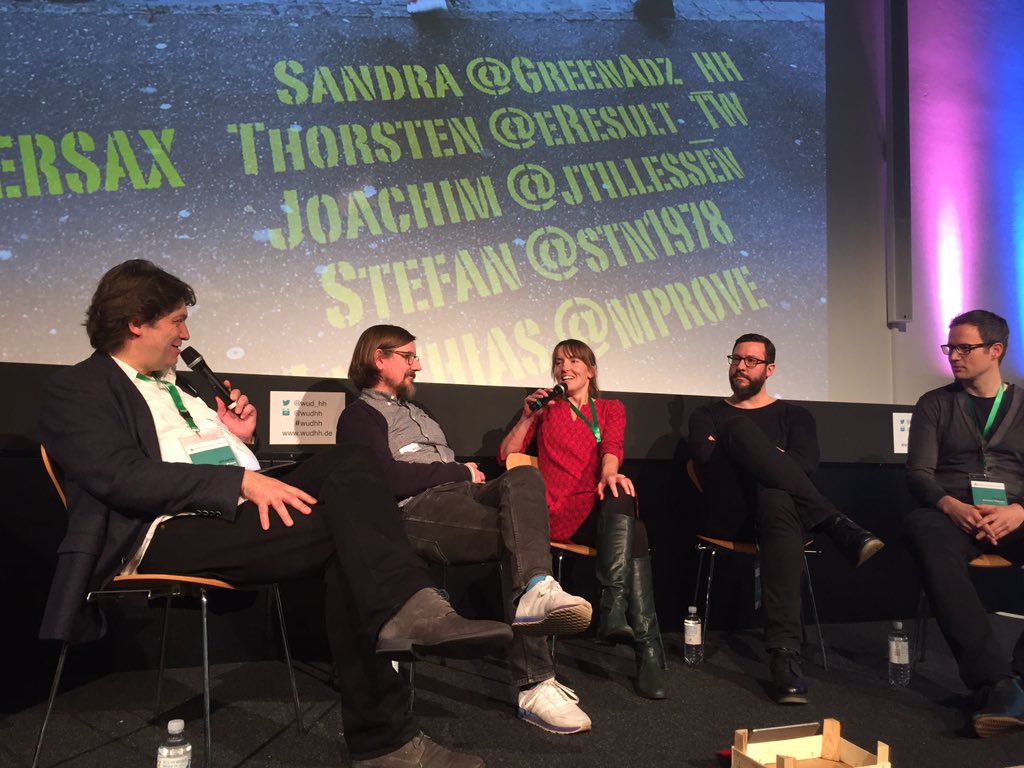
Die Bahn sah sich leider außerstande, Thorsten pünktlich nach Hamburg zu bringen. Dafür konnten wir spontan Rainer Sax zu uns aufs Podium einladen. Vielen Dank für Dein kompetentes Einspringen, Rainer!
Video
Video Playlist: WUDHH 2018 > Podiumsdiskussion: Design for Good or Evil
Feedback – please leave a message
Ania Groß:
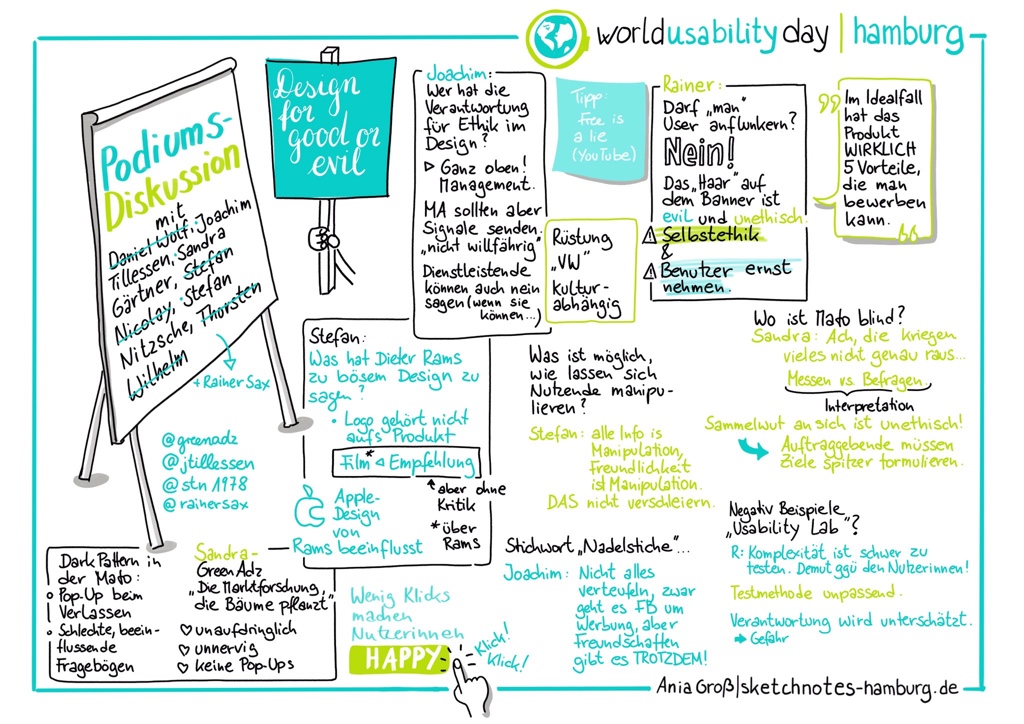
@GreenAdz_HH @jtillessen @rainersax @stn1978 mit einer Diskussion zu Good or Evil Design auf dem #wudhh. #sketchnotes
eResult:
Danke für einen spannenden Gedankenaustausch bei der Podiumsdiskussion beim @wud_hh #wudhh Und Danke an @mprove @jtillessen @GreenAdz_HH @stn1978 @rainersax
- I’d be happy to get your feedback via_
- Mastodon: @mprove@hci.social or chronohh@norden.social
 mprove@acm.org
- Other channels
WUD Hamburg
Donnerstag, 8. November 2018
à propos
- Innovation durch Inklusion, Paneldiskussion zum WUDHH 2017
- AlgoRhythm is it! – Reflexionen in einer programmierten Welt. /mprove 2017
- Expectation Design: The Next Frontier /by Don Norman 2014
- Piet Vroon: Drei Hirne im Kopf – Warum wir nicht können, wie wir wollen. Zürich. 1993
Credits: Dieter Rams’ Design Principles CC-BY-NC-ND 4.0 Vitsoe; "warte-lüge…" cc mprove; devider image "vor dem Panel" by VBG